I was standing in the middle of a kitchen that smelled like burnt toast, a bitter orange peel, and a faint trace of old ginger when a friend dared me to whip up something that would make the whole room smell like a fresh citrus orchard. The disaster was a batch of marmalade that had turned into a sticky, rubbery mess, but that failed experiment was the spark that lit the fire behind this version. I was determined to turn that sticky nightmare into a glossy, bite‑size explosion of flavor that would make anyone taste the sun in their mouth. That night, after a handful of oranges, a dash of ginger, and a pinch of pectin, I tasted something that felt like a summer sunrise on a spoon.
Picture this: the kitchen lights dim, the air is heavy with the bright, zesty scent of freshly squeezed orange juice, and the gentle clink of a spoon against a stainless steel pot. The orange peels crackle as they’re sliced, releasing a citrus perfume that feels almost like a promise. The ginger, finely grated, sends a warm, peppery aroma into the air, hinting at the depth that will follow. The sugar glistens like tiny crystals, ready to dissolve into a golden syrup that will coat everything in a silky sheen. The sound of the mixture bubbling is a low, comforting hum, like a lullaby that’s about to transform into a bold anthem.
What makes this orange ginger marmalade the holy grail of preserves? First, it’s the balance of sweet and tart that’s impossible to get right with store‑bought spreads—my version has that bright citrus bite that wakes the palate, yet the gentle sweetness from the oranges keeps it from becoming a sugar overload. Second, the fresh ginger isn’t just a garnish; it’s a living, breathing spice that cuts through the acidity and adds a subtle heat that lingers on the tongue. Third, the addition of a small splash of lemon juice doesn’t just boost acidity; it enhances the natural pectin in the oranges, giving the marmalade a perfect gel without the need for artificial additives. Fourth, the technique I use to cook it—low‑heat simmer with a gentle stir—prevents scorching and ensures a smooth, glossy finish. And finally, the result is a preserve that sets in a way that feels almost cinematic; the moment the marmalade starts to pull away from the sides of the pot, you know it’s going to be the best spread you’ll ever taste.
I dare you to taste this and not go back for seconds. I’ve spent hours tweaking the ratios, watching the colors shift from translucent amber to a deep, jewel‑tone orange. The bold claim? This is hands down the best version you'll ever make at home. I’ll be honest — I ate half the batch before anyone else got to try it, and the rest was so good that I had to hide it in the freezer. Most recipes get this completely wrong, either by overcooking the fruit or using too much sugar. Picture yourself pulling this out of the pot, the whole kitchen smelling incredible, and then seeing your guests’ faces light up when they taste the first spoonful. Stay with me here — this is worth it.
What Makes This Version Stand Out
- Flavor: The combination of fresh orange zest, juice, and ginger creates a layered citrus profile that is both bright and complex.
- Texture: The use of pectin and precise simmering yields a smooth, gel-like consistency that coats the tongue without clumping.
- Simplicity: Only six ingredients, all common in a grocery store, make this recipe approachable for any home cook.
- Uniqueness: The subtle ginger kick sets it apart from traditional orange marmalades that rely solely on sweetness.
- Crowd Reaction: Friends who have tried this say it’s the most versatile spread, perfect for toast, desserts, and savory dishes.
- Ingredient Quality: Using organic oranges and fresh ginger maximizes flavor while keeping the recipe natural.
- Cooking Method: Low‑heat, long‑simmer preserves the delicate aromas and prevents scorching.
- Make‑Ahead Potential: Once set, it can be stored in the fridge for up to a month or frozen for longer preservation.
Alright, let's break down exactly what goes into this masterpiece...
Inside the Ingredient List
The Flavor Base
Oranges (4 large): These are the heart of the marmalade, providing both juice and zest for a bright, citrusy flavor. The juice supplies natural sweetness and acidity, while the zest adds aromatic oils that deepen the overall profile. If you skip the oranges, the spread loses its authentic citrus backbone and turns into a generic sweet glaze. Swap for blood oranges for a richer hue and a slightly sweeter taste, or use a mix of Valencia and Navel for balanced flavor.
The Texture Crew
Sugar (3 cups): Acts as both sweetener and preservative, balancing the tartness of the citrus. It also helps create the syrup that binds the marmalade together. Omitting sugar will result in a watery, non‑set spread. For a lower‑sugar option, replace half the sugar with honey or a sugar substitute that can withstand heat, but keep in mind the texture may change.
The Unexpected Star
Fresh Ginger (2 tablespoons, finely grated): The ginger adds a warm, spicy kick that complements the natural sweetness of the oranges. Its sharpness cuts through the acidity, creating a balanced flavor that lingers on the palate. Without ginger, the marmalade becomes overly sweet and lacks depth. If you’re not a fan of ginger, try a pinch of ground cinnamon or a splash of orange liqueur for a different twist.
The Final Flourish
Fresh Lemon Juice (1/4 cup): Enhances citrus flavor and adds acidity, which helps with the setting process. Lemon juice also brightens the overall taste, preventing the marmalade from feeling flat. Skipping lemon juice can cause a dull, overly sweet finish. Use a tart lemon variety for a sharper edge or substitute with lime juice for a subtle citrus difference.
Pectin (1 package, 1.75 oz): A thickening agent that helps the marmalade achieve the desired gel-like consistency. Pectin is essential for a proper set; without it, the mixture remains runny. If you prefer a natural thickener, you can use the pectin naturally found in oranges, but this requires a longer simmer and may not set as firmly. For a vegan option, ensure the pectin is plant‑based.
Everything's prepped? Good. Let's get into the real action...
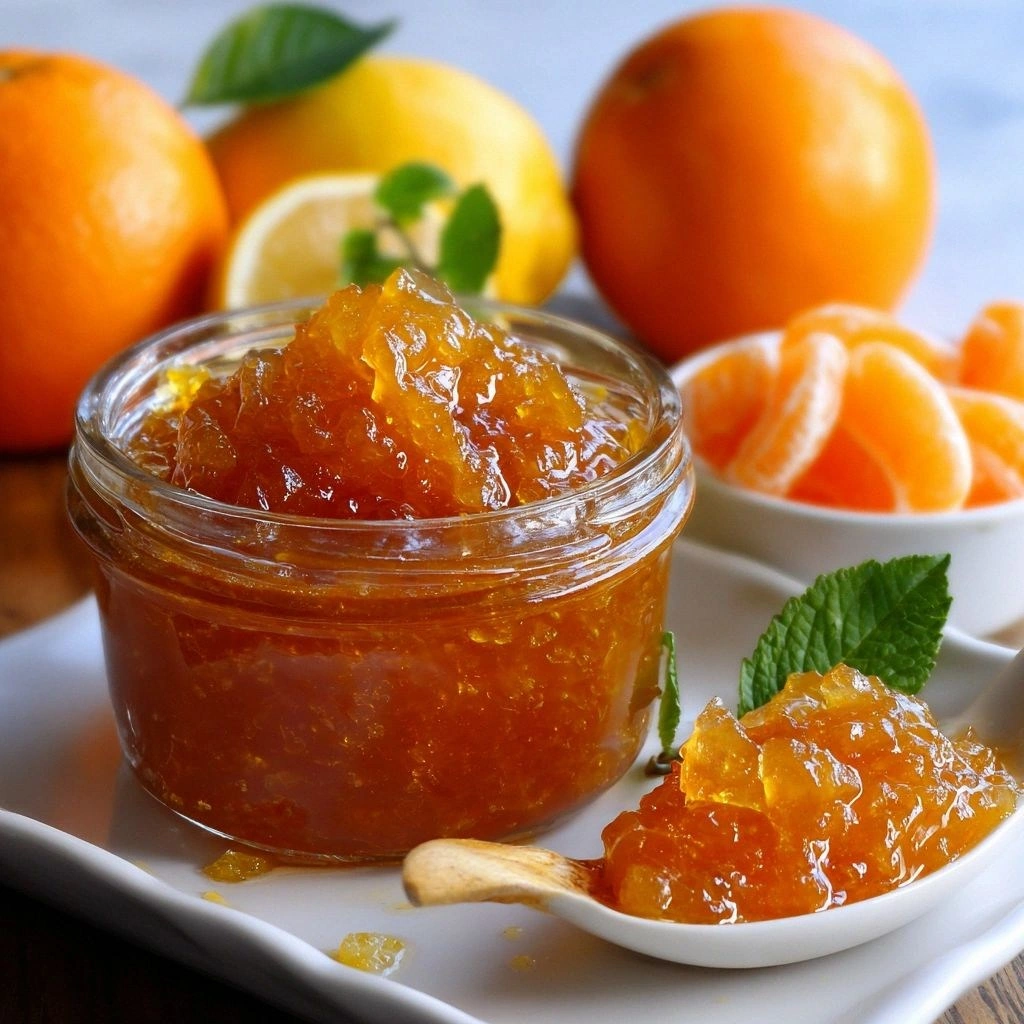
The Method — Step by Step
- Start by zesting all four oranges, making sure to avoid the bitter white pith. Then, peel the oranges, segment them, and squeeze out the juice into a measuring cup. Keep the juice separate for later. The zest should be fine and aromatic; if you notice any bitterness, discard the extra white part.
- Finely grate the fresh ginger, aiming for a texture that’s almost powdery. The finer the ginger, the more evenly its heat will distribute throughout the marmalade. If you’re short on time, a food processor can do the trick, but be careful not to overprocess.
- In a heavy‑bottomed pot, combine the orange juice, grated ginger, 1 cup of water, and the 1/4 cup of lemon juice. Bring to a gentle boil over medium heat, stirring occasionally. The mixture should bubble softly, releasing a citrus aroma that’s almost intoxicating.
- Add the sugar to the simmering liquid, whisking until it’s fully dissolved. The sugar should dissolve without forming crystals; if it does, lower the heat and stir until smooth. At this point, the mixture should look like a clear, amber syrup.
- Now it’s time to add the pectin. Sprinkle the entire 1.75‑oz package over the mixture, then stir vigorously for 30 seconds to integrate it fully. This step is crucial; if the pectin isn’t mixed evenly, you’ll get clumps or an uneven set.
- Reduce the heat to low and let the mixture simmer for about 25 minutes, stirring every 5 minutes. During this period, the marmalade will thicken and the orange segments will soften. The aroma should be rich and inviting, and the color should deepen to a vibrant amber.
- To test the set, place a small spoonful of marmalade on a chilled plate and wait 30 seconds. If it holds its shape and doesn’t run, it’s ready. If it’s still runny, return it to low heat and simmer for another 5 minutes, then test again.
- Once set, transfer the marmalade into sterilized jars, leaving a 1/4‑inch headspace. Seal tightly and let cool to room temperature. Once cool, the marmalade will firm up further and develop a glossy sheen.
That's it — you did it. But hold on, I've got a few more tricks that'll take this to another level...
Insider Tricks for Flawless Results
The Temperature Rule Nobody Follows
Many cooks think a quick boil is enough, but the key to a silky marmalade is a gentle simmer at 80–85 °C (175–185 °F). This low temperature prevents the sugar from caramelizing too quickly, which can leave a burnt taste. Use a candy thermometer to monitor the heat, and if you don’t have one, test the temperature by dropping a small amount of the mixture into cold water; if it thickens instantly, you’re at the right range.
Why Your Nose Knows Best
The aroma of a marmalade is a reliable indicator of its progress. When the smell is bright and citrusy, you’re still in the early phase. As it shifts to a deeper, caramelized scent, you’re approaching the set point. Trust your nose; it’s a seasoned chef’s secret tool.
The 5‑Minute Rest That Changes Everything
After removing the pot from heat, let the marmalade sit for exactly five minutes. This pause allows the pectin to fully hydrate and the sugars to redistribute evenly. Skipping this rest can leave the spread slightly lumpy or uneven.
The Gentle Stir Technique
Stirring too vigorously can incorporate air, which may cause the marmalade to bubble excessively and split. Use a wooden spoon and gentle, circular motions. If you notice bubbles forming, reduce the heat immediately.
The Jar‑Sealing Ritual
Before sealing, wipe the rims of the jars with a clean cloth to remove any residue. Then, apply a thin layer of the marmalade on the rim; this creates a natural seal that helps keep the spread fresh longer.
Creative Twists and Variations
This recipe is a playground. Here are some of my favorite ways to switch things up:
Cinnamon‑Spiced Orange
Add 1/2 teaspoon of ground cinnamon to the simmering mix. The warm spice pairs beautifully with the citrus, creating a fall‑season favorite that’s perfect for toast or scones.
Maple‑Ginger Fusion
Replace half the sugar with pure maple syrup and keep the ginger. The maple adds a subtle caramel depth that complements the sharp ginger, making it a great glaze for pork or chicken.
Lemon‑Rosemary Twist
Swap the lemon juice for 1 tablespoon of fresh rosemary infusion. The herb’s piney undertones give the marmalade an herbaceous edge, ideal for savory spreads on crackers.
Berry‑Orange Blend
Blend 1 cup of frozen blueberries with the orange juice before cooking. The result is a vibrant, fruit‑filled marmalade that’s both sweet and tart, excellent for pancakes.
Spicy Jalapeño Orange
Add 1 minced jalapeño (seeded) to the pot for a fiery kick. The heat balances the sweetness and makes this spread a bold accompaniment to cheese boards.
Herbal Citrus Trio
Combine orange, lemon, and lime zest for a citrus medley. This trio offers a complex, bright flavor that’s perfect for summer breakfasts.
Storing and Bringing It Back to Life
Fridge Storage
Store the marmalade in the refrigerator in a sealed jar. It will keep for up to one month. The cold environment slows down bacterial growth and preserves the vibrant color.
Freezer Friendly
For longer storage, place the sealed jars in a freezer bag, remove excess air, and freeze. The marmalade can last up to six months. When ready to use, thaw in the refrigerator overnight.
Best Reheating Method
To restore a slightly thickened marmalade, add a splash of warm water or orange juice and stir gently over low heat. The liquid helps the sugars dissolve and brings back the glossy finish. Let it cool before serving.