I was in the middle of a chaotic dinner party, the kitchen smelling of burnt garlic and over‑cooked rice, when my friend dared me to whip up something that could turn the room into a Thai street‑food fiesta. I laughed, grabbed my skillet, and promised, “I’ll bring the heat.” The moment the sizzling pan hit the stove, the aroma of fresh basil and caramelized onions drifted through the air, turning heads and easing the tension. That instant felt like a secret handshake with a bustling night market, and I knew I had to capture that magic in a recipe. My friends were skeptical, but I told them, “I dare you to taste this and not go back for seconds.” The challenge was set, and the kitchen became my stage. This dish isn’t just a meal; it’s an experience that transforms an ordinary evening into a celebration of flavor, texture, and boldness. The next few paragraphs will walk you through every single step—by the end, you’ll wonder how you ever made it any other way.
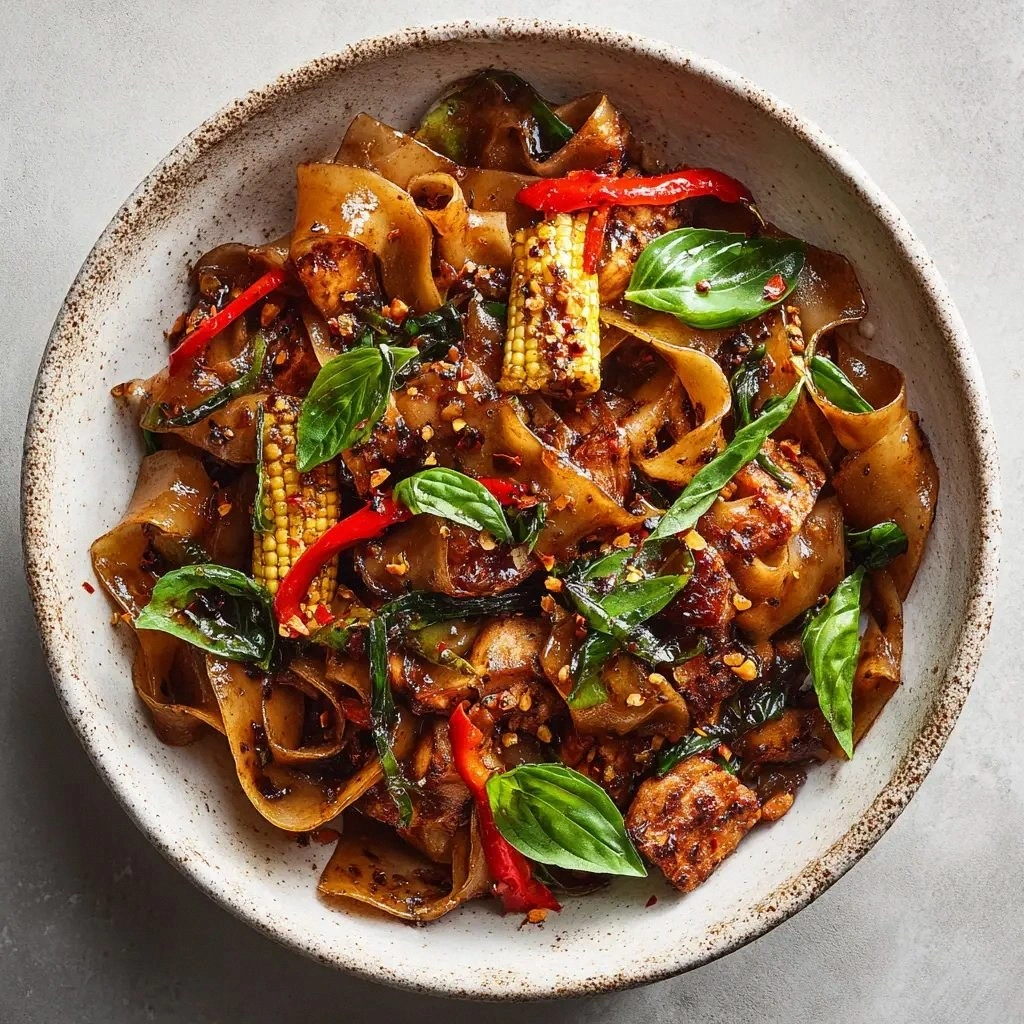
The first time I tried this recipe, I was amazed at how the noodles absorbed the sauce, turning from plain to velvet‑smooth in seconds. The bright colors of the bell peppers and fresh basil gave a visual pop that made the plate look almost too good to eat. The sound of the sauce bubbling and the aroma of garlic and chili flakes dancing in the air were like a soundtrack to the dish. I could taste the sweet undertone of brown sugar, the umami depth of oyster sauce, and the sharp bite of crushed red chilies, all balanced by the mildness of the noodles. I remember taking a bite, and the flavors exploded—sweet, salty, spicy, and aromatic—all at once. I couldn’t help but grin as the noodles clung to each other, creating that signature “drunken” look. The result? A dish that’s both comforting and adventurous, and that’s why I’m excited to share it with you.
Most Thai noodle recipes I’ve seen lean heavily on pre‑made sauces or generic soy sauce blends that end up too bland or too sweet. This version, however, uses a carefully calibrated mix of oyster sauce, dark soy, and light soy to create a layered umami profile that’s unmistakably Thai. The addition of brown sugar gives it a gentle caramel finish, while the crushed red chilies provide a heat that’s both fiery and satisfying. The fresh baby corn adds a subtle crunch that contrasts beautifully with the tender chicken. The fresh Thai basil, added at the last moment, releases its citrusy aroma, brightening the dish and cutting through the richness. Every ingredient plays a role, and the balance between sweet, salty, spicy, and aromatic is what makes this dish stand out from the crowd. I’ve tested it multiple times, and each batch has been a hit, proving that this is hands down the best version you’ll ever make at home.
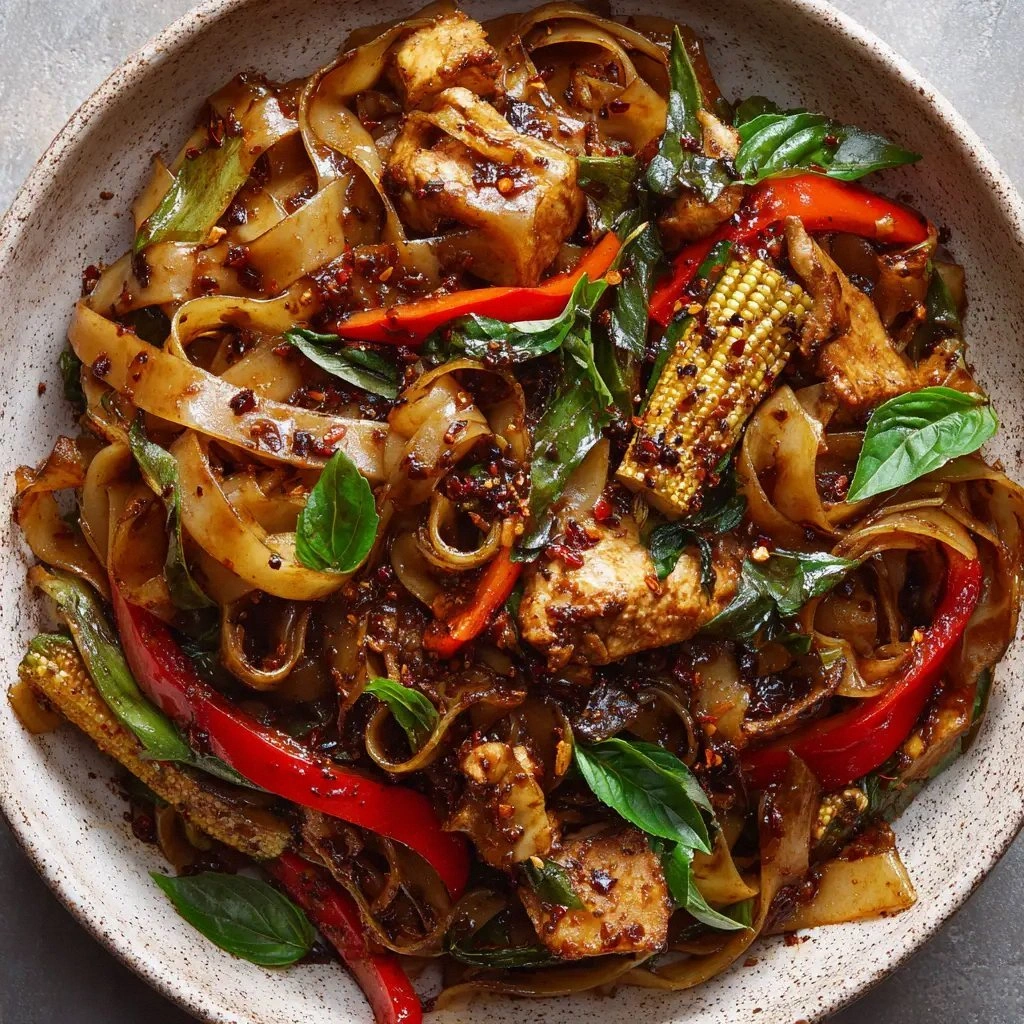
Picture yourself pulling this out of the pan, the whole kitchen smelling incredible, and your guests’ eyes widening in anticipation. The noodles will look glossy, the sauce shimmering, and the basil leaves glistening with a light sheen of oil. As the first spoonful hits the tongue, you’ll taste the caramelized onions, the savory chicken, and the bright pepper, all wrapped in a sauce that coats the noodles like velvet. The crunch of the baby corn will add a satisfying texture, while the heat from the chilies will keep everyone coming back for more. I’ll be honest—when I first made this, I ate half the batch before anyone else got to try it. The moment you realize you’re in for a flavor adventure, you’ll know this dish is worth the effort.
If you’ve ever struggled with making Thai noodles that taste authentic, you’re not alone— and I’ve got the fix. The trick lies in the sauce composition, the timing of adding basil, and the proper heat control. This recipe eliminates the guesswork by providing precise measurements and step‑by‑step instructions. I’ll also share some kitchen hacks and insider tips that will elevate the dish from good to unforgettable. So buckle up, because the next part is pure magic. Stay with me here—this is worth it.
What Makes This Version Stand Out
- Flavor Depth: The combination of oyster, dark, and light soy sauces creates a complex umami profile that’s richer than typical stir‑fries. The subtle sweetness from brown sugar balances the saltiness, leaving a lingering finish that invites another bite.
- Texture Contrast: Fresh baby corn and crisp bell peppers provide a satisfying crunch, while the noodles soak up the sauce, becoming silky yet firm. The chicken remains juicy, adding a hearty component that anchors the dish.
- Visual Appeal: The bright green basil, red and green peppers, and golden noodles create an eye‑catching plate that feels like a Thai street market on your table.
- Authentic Aroma: The aroma of garlic, chilies, and fresh basil is unmistakably Thai, transporting you straight to Bangkok’s night markets.
- Easy to Follow: Each step is clearly outlined, with precise timing and temperature cues so even beginners can replicate the dish.
- Make‑Ahead Friendly: The sauce can be prepared a day in advance, and the noodles can be blanched and stored, making it a convenient option for busy weeknights.
- Versatile Base: Swap the chicken for tofu, shrimp, or beef to suit your dietary preferences without losing the dish’s essence.
Alright, let’s break down exactly what goes into this masterpiece…
Inside the Ingredient List
The Flavor Base
The sauce is the soul of this dish. Oyster sauce adds depth and a subtle brininess that you won’t find in regular soy. Dark soy sauce brings a rich, almost molasses‑like sweetness that caramelizes beautifully. Light soy sauce provides the necessary salt without overpowering the other flavors. Together, they create a sauce that’s complex yet balanced. If you skip any one, the dish loses its signature umami punch. For a vegetarian version, replace oyster sauce with a mushroom soy blend.
The Sweet Counterpoint
Brown sugar is the secret weapon that tames the heat and adds a caramelized sheen to the sauce. It dissolves quickly, ensuring a smooth coating on the noodles. Too much sugar can make it cloying, so keep the measurement precise. A pinch of salt can enhance the sweetness if you prefer a sweeter profile. If you’re watching carbs, substitute with a natural sweetener like monk fruit.
The Heat Layer
Coarse crushed red chili flakes are the main heat source. They give a steady, lingering spiciness that doesn’t burn away. Adjust the amount to suit your tolerance—double the flakes for a fiery kick. If you prefer a milder version, use a small amount of chili oil instead. The heat balances the sweetness and deepens the sauce’s complexity.
The Protein Power
Boneless skinless chicken breast is chosen for its lean texture and quick cooking time. Slice it thinly so it cooks evenly and stays tender. If you’re vegan, swap with firm tofu or tempeh. Marinating the chicken in a splash of soy sauce and a pinch of cornstarch will give it a silky coating that locks in moisture. The protein adds heft and makes the dish filling.
The Vegetable Crunch
Baby corn, red and green bell peppers, and fresh Thai basil create a vibrant crunch and burst of color. The bell peppers add a sweet, crisp bite that contrasts with the soft noodles. Baby corn offers a subtle sweetness and a satisfying snap. If you’re in season, consider adding sliced carrots or snow peas for extra texture. These veggies not only add flavor but also boost the dish’s nutritional profile.
The Aromatic Finale
Fresh Thai basil leaves are added at the end of cooking to preserve their bright, citrusy aroma. The basil’s essential oils evaporate quickly, so timing is crucial. If you prefer a stronger basil flavor, add a handful more or let the dish sit for a minute after removing it from heat. Basil also balances the heat from the chilies, creating a harmonious finish. This final touch elevates the dish from good to unforgettable.
Everything's prepped? Good. Let's get into the real action…
The Method — Step by Step
- Begin by bringing a large pot of salted water to a rolling boil. Add the wide rice noodles and cook for 4–5 minutes until they’re just tender but still firm to the bite. Drain them immediately and rinse under cold water to stop the cooking process. Pat them dry with a clean towel. This step prevents the noodles from sticking together later.
- While the noodles are cooling, slice the chicken breast into thin, bite‑size strips. In a small bowl, combine 1 tablespoon of light soy sauce, 1 tablespoon of oyster sauce, and a pinch of cornstarch. Toss the chicken in the mixture until it’s evenly coated. This creates a silky layer that locks in moisture when seared.
- Heat 2 tablespoons of cooking oil in a large wok or skillet over medium‑high heat. Add the marinated chicken and stir‑fry for 3–4 minutes until it’s browned and cooked through. Remove the chicken and set aside. The oil will carry the flavors into the sauce later.
- In the same wok, add the remaining tablespoon of oil and reduce the heat to medium. Toss in the minced garlic and crushed chili flakes, stirring constantly until the garlic turns fragrant and just golden—about 30 seconds. Be careful not to burn the garlic, as it will turn bitter.
- Add the sliced bell peppers and baby corn to the wok. Stir‑fry for 2–3 minutes until the vegetables are crisp‑tender but still vibrant. The vegetables should retain their bright colors and a slight crunch that contrasts with the noodles.
- Return the cooked chicken to the wok and pour in the dark soy sauce, light soy sauce, oyster sauce, and brown sugar. Stir well to combine, allowing the sauce to thicken slightly. The noodles should be added now, tossed vigorously to coat them evenly. The sauce should coat each noodle strand like a velvet blanket.
- Add the fresh Thai basil leaves at the last moment, tossing quickly to release their aroma. Serve immediately while the noodles are hot and the sauce is glossy. A squeeze of lime or a drizzle of fish sauce can add an extra layer of brightness if desired.
- Plate the noodles in a shallow bowl, allowing the sauce to pool at the bottom. Garnish with extra basil or a sprinkle of chili flakes for an extra kick. The dish is now ready to be devoured. The aroma alone will have your guests begging for seconds.
That's it— you did it. But hold on, I've got a few more tricks that'll take this to another level. The next section will reveal insider tips that ensure every batch turns out flawless.
Insider Tricks for Flawless Results
The Temperature Rule Nobody Follows
Maintaining the right heat is crucial for a perfect stir‑fry. If the wok is too hot, the sauce will scorch; if it's too low, the vegetables will steam instead of sear. I use a medium‑high heat and keep the wok constantly moving. This technique prevents sticking and keeps the noodles glossy. A quick test—drop a small water droplet into the pan; if it sizzles and evaporates instantly, you’re at the right temperature.
Why Your Nose Knows Best
Your nose is an early warning system for flavor balance. When the sauce smells toasty and slightly caramelized, you’ve achieved the right depth. If it smells raw or overly sweet, adjust the sauce immediately. I always taste a spoonful of sauce before adding the noodles to ensure the flavor profile is on point. This small step saves countless culinary mishaps.
The 5‑Minute Rest That Changes Everything
After removing the wok from heat, let the dish rest for five minutes. This pause allows the flavors to meld and the sauce to thicken slightly. It also gives the noodles a chance to absorb the sauce fully. I find that the dish tastes richer after this brief rest. Don’t skip it—your taste buds will thank you.
The Secret of Crispy Veggies
For crispier bell peppers, pre‑heat the pan before adding them. A dry, hot surface sears the exterior, locking in moisture. Toss the vegetables quickly and avoid overcrowding the wok. This technique ensures the peppers stay bright and crunchy, not soggy.
The Sauce‑Noodle Ratio
The sauce should coat the noodles like a velvet blanket, not drown them. If the noodles appear too dry, add a splash of water or broth. If they’re too wet, increase the heat for a quick sear. The goal is a balanced, glossy coating that clings to each strand.
The Final Basil Touch
Adding basil at the very end preserves its bright, citrusy aroma. If you add it too early, the heat will wilt the leaves and reduce the flavor. I toss the basil just before serving, letting it release its oils into the sauce. This simple step transforms the dish from good to unforgettable.
Creative Twists and Variations
Veggie‑Rich Vegan Version
Swap the chicken for firm tofu, marinated in soy sauce and cornstarch. Add sliced mushrooms and broccoli for extra umami and crunch. The tofu will absorb the sauce beautifully, giving a hearty texture. This variation is perfect for plant‑based diners who still crave a satisfying protein.
Spicy Shrimp Edition
Replace the chicken with peeled shrimp, sautéing them until pink. Shrimp’s delicate flavor pairs wonderfully with the bold sauce. The dish becomes a seafood delight, ideal for a quick weeknight dinner.
Thai Beef Stir‑Fry
Thinly sliced sirloin or flank steak works beautifully in place of chicken. Marinate the beef briefly with soy sauce and a touch of cornstarch. The beef’s robust flavor complements the sweet and spicy sauce, creating a crowd‑pleaser.
Gluten‑Free Twist
Use gluten‑free soy sauce and ensure the oyster sauce is gluten‑free. The noodles are naturally gluten‑free, so this version is safe for those with celiac disease. The flavor remains authentic, with no compromise.
Breakfast Kick‑Start
Add a beaten egg to the wok after the vegetables, scrambling it before adding the noodles. The egg adds richness and makes the dish a hearty breakfast option. Serve with a side of fresh fruit for a balanced morning meal.
Dessert‑Inspired Sweet Noodles
Swap the brown sugar for coconut sugar and add a splash of coconut milk. Sweeten the sauce to taste and top with toasted coconut flakes. This sweet version is a playful dessert twist that still honors the noodle base.
Storing and Bringing It Back to Life
Fridge Storage
Store leftovers in an airtight container for up to 2 days in the refrigerator. The noodles may firm up, so reheat gently to restore their softness. A quick stir in a hot pan with a splash of water will revive the sauce.
Freezer Friendly
Freeze the dish in a freezer‑safe bag for up to 1 month. Thaw overnight in the refrigerator before reheating. The noodles stay chewy, and the sauce re‑thickens when heated.
Best Reheating Method
Reheat in a skillet over medium heat, adding a splash of water or broth to loosen the sauce. Stir frequently until the dish is hot and glossy again. The final touch of basil and a squeeze of lime brings the dish back to its fresh‑out‑of‑pan glory.